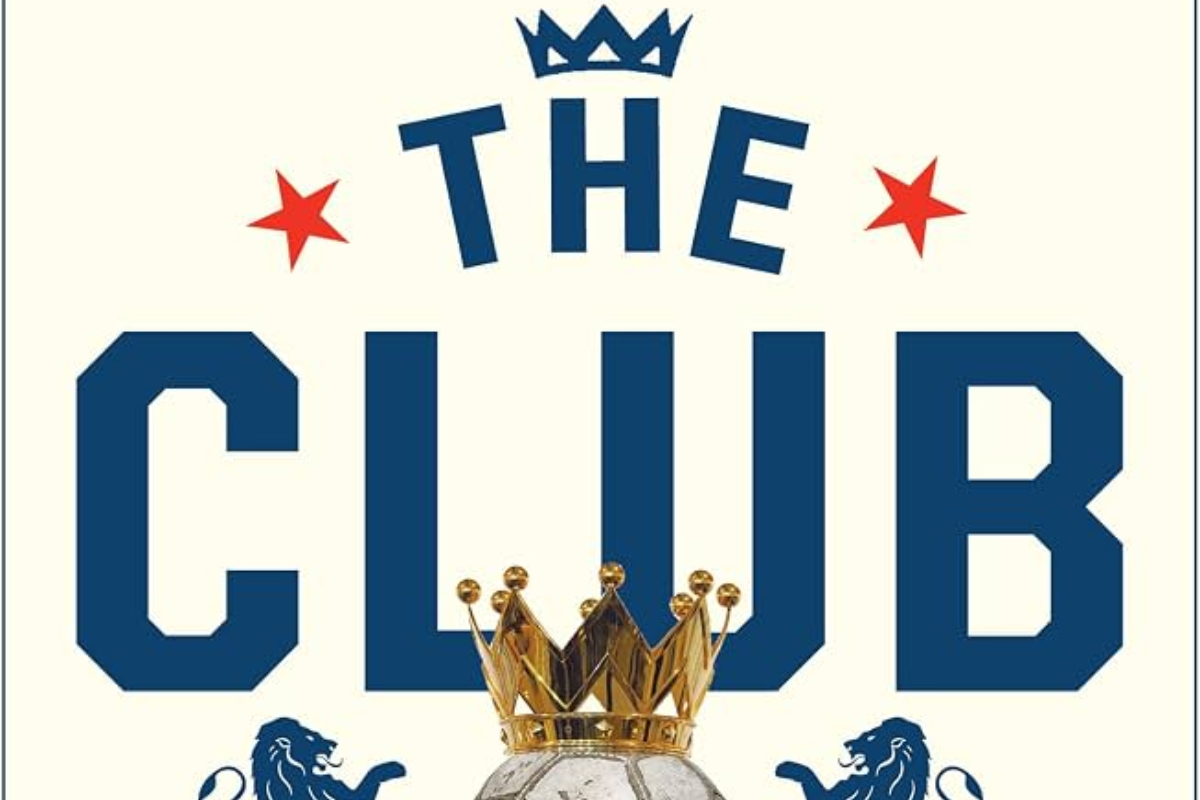
The Club by Joshua Robinson and Jonathan Clegg reveals how England’s top football clubs broke away in 1992 to build a multibillion-pound global empire. Combining Wall Street financial reporting with British football history, this review examines how television rights, foreign billionaires, and American private equity transformed the beautiful game into the world’s most lucrative entertainment spectacle.
-
Book Title: The Club: How the English Premier League Became the Wildest, Richest, Most Disruptive Force in Sports
-
Authors: Joshua Robinson and Jonathan Clegg (Wall Street Journal correspondents)
-
Final Editorial Rating: 4.5 out of 5 Stars
-
Recommended For: Match-going supporters, football finance enthusiasts, and sports business analysts wanting to understand the corporate takeover of the British game.
- Buy on Amazon: The Club https://www.amazon.in/Club-English-Premier-Wildest-Disruptive/dp/1328506452
Why This The Club Book Review Matters for Modern Football Fans
If you are looking for an honest The Club book review, this breakdown explores why English football evolved from a struggling domestic competition into the richest sports league on earth.
In the late 1980s, English football was facing structural collapse. Stadiums were crumbling, tragedy struck Hillsborough and Heysel, hooliganism plagued matchdays, and English clubs were banned from competing in Europe. At that time, the sport was commercially neglected and culturally embattled.
However, over the subsequent three decades, a breathtaking transformation occurred.
Today, the English Premier League broadcasts into more than 800 million homes across 188 countries. It commands billions of pounds in television rights and attracts foreign billionaires, sovereign wealth funds, and American private equity firms.
In The Club: How the English Premier League Became the Wildest, Richest, Most Disruptive Force in Sports, Wall Street Journal correspondents Joshua Robinson and Jonathan Clegg document this metamorphosis. Instead of romanticising football nostalgia, the authors treat the league like a multibillion-pound corporate takeover.
Consequently, the book uncovers the backroom conspiracies, boardroom gambles, and television rights wars that built a global entertainment behemoth. Below is our comprehensive analysis of the book, its central findings, and our definitive buying recommendation.
How Did a Clandestine London Dinner in 1990 Spark the Breakaway?
The most captivating chapters in The Club take readers inside the secret meetings that dismantled a century of British football history.
Prior to 1992, professional football belonged to the 92-club Football League. Under that system, broadcasting revenues were distributed equally across all four tiers. However, the leading clubs – Arsenal, Everton, Liverpool, Manchester United, and Tottenham Hotspur (the traditional “Big Five”) – grew impatient with subsidising smaller clubs while receiving modest television fees.
Robinson and Clegg document the turning point in October 1990 during a private dinner in London. At that dinner, television executive Greg Dyke proposed an audacious blueprint to Arsenal vice-chairman David Dein: break away from the Football League, create a self-contained 20-club division, and keep 100 per cent of all broadcasting money.
Furthermore, the Football Association supported the breakaway in an effort to weaken the rival Football League. As a result, the Premier League was born not out of sporting necessity, but as an unapologetic vehicle to capture unregulated television cash.
Why Was Rupert Murdoch’s Satellite Network the Decisive Catalyst?
The breakaway proposal required a massive financial engine to survive, and it found one in Rupert Murdoch’s Sky Television.
In 1992, Sky was losing millions of pounds every week. British consumers were hesitant to mount expensive satellite dishes on their homes just to watch films. Therefore, Murdoch recognised that exclusive, live Premier League football was the only consumer hook powerful enough to drive widespread subscription purchases.
The authors recreate the tense bidding war where BSkyB outmanoeuvred terrestrial rival ITV with a stunning £304 million offer across five seasons.
By wrapping live football in glitzy packaging – complete with dramatic theme music, pyrotechnics, and extensive punditry – Sky reinvented the sport as appointment viewing. Consequently, domestic broadcast income surged, allowing English clubs to outbid European heavyweights like Juventus and Real Madrid for world-class playing talent.
How Did American Capital and Foreign Oligarchs Transform Ownership?
As the Premier League expanded across international television screens, ownership shifted from local British industrialists to global financiers. Robinson and Clegg categorise this change into three distinct phases:
1. The Era of Oligarch Vanity
In 2003, Roman Abramovich bought Chelsea. As a result, football clubs became geopolitical status symbols rather than profit-seeking enterprises, setting off an unsustainable spending race.
2. The Wall Street Financial Engineering
The authors offer a brilliant chapter detailing the Glazer family’s 2005 purchase of Manchester United. Using a leveraged buyout (LBO) model, the Glazers placed over £500 million of debt onto a historically debt-free club, forcing United to service massive loan repayments using its own commercial earnings.
3. Sovereign Wealth and Multi-Club Portfolios
Finally, the arrival of Abu Dhabi’s investment in Manchester City completed the institutional transition. Football shifted from single civic clubs into multi-club corporate networks spanning several continents.
Critical Analysis: What Price Did the Traditional Match-Going Supporter Pay?
While The Club chronicles an extraordinary commercial triumph, British supporters reading this book will recognise the cultural costs of hyper-commercialisation:
-
Priced-Out Terraces: General admission ticket prices increased dramatically over three decades, replacing generational local supporters with corporate hospitality clients and tourist spectators.
-
Fragmented Matchday Schedules: Historic Saturday 3:00 PM kick-offs were repeatedly moved to Sunday evenings and Monday nights to satisfy prime-time audiences in Asia and the Americas.
-
The Widening Pyramid Wealth Gap: The financial gulf separating the Premier League from the English Football League (EFL) widened into a chasm, contributing to financial emergencies at historic community clubs like Bury and Oldham Athletic.
Detailed Review Comparison and Assessment Matrix
| Feature Evaluated | Performance in The Club | Analytical Verdict |
| Financial Analysis | Exceptional detail on television contracts and takeovers. | Translates complex balance sheets into gripping prose. |
| Investigative Access | High-level interviews with executives and club owners. | Exposes boardroom politics better than any rival book. |
| Grassroots Coverage | Limited discussion on match-going supporter culture. | Focuses primarily on boardroom boardrooms rather than terraces. |
| Historical Value | Thorough documentation of 1992 breakaway logistics. | Essential reading for understanding modern sport economics. |
The Final Editorial Verdict and Recommendation
-
Rating: 4.5 / 5 Stars https://www.goodreads.com/book/show/40225612-the-club
-
Should You Buy It? Yes. If you want to understand why modern football functions like a multinational media corporation rather than a simple community sport, this book is essential reading.
-
Our Recommendation: Skip generic player autobiographies this season. Pick up The Club by Robinson and Clegg to learn how private equity, television executives, and global investors permanently redrew the map of British sport.
Frequently Asked Questions
Who are the authors of The Club?
The Club was written by Joshua Robinson and Jonathan Clegg, both of whom serve as senior sports reporters for the Wall Street Journal.
Does the book explain the European Super League project?
Yes. The book provides the historical, financial, and boardroom groundwork that explains why top Premier League owners attempted to launch the breakaway European Super League in 2021.
Is The Club suitable for casual football readers?
Absolutely. While the authors examine complex financial models and broadcasting negotiations, the writing is fast-paced, anecdotal, and easy to follow without any background in economics.
Also Read: https://thecoverdrivestory.com/sportstainment/wwe-netflix-guide/
Read: https://thecoverdrivestory.com/sports/rays-vs-yankees-game-2-start-time-tv-channel-live-stream-mlb/

Navya writes on global politics, foreign policy, and international relations. A Political Science graduate from Miranda House, she went on to complete her master’s degree at Delhi University. She focuses on breaking down complex geopolitical shifts and global events into clear, insightful explainers.