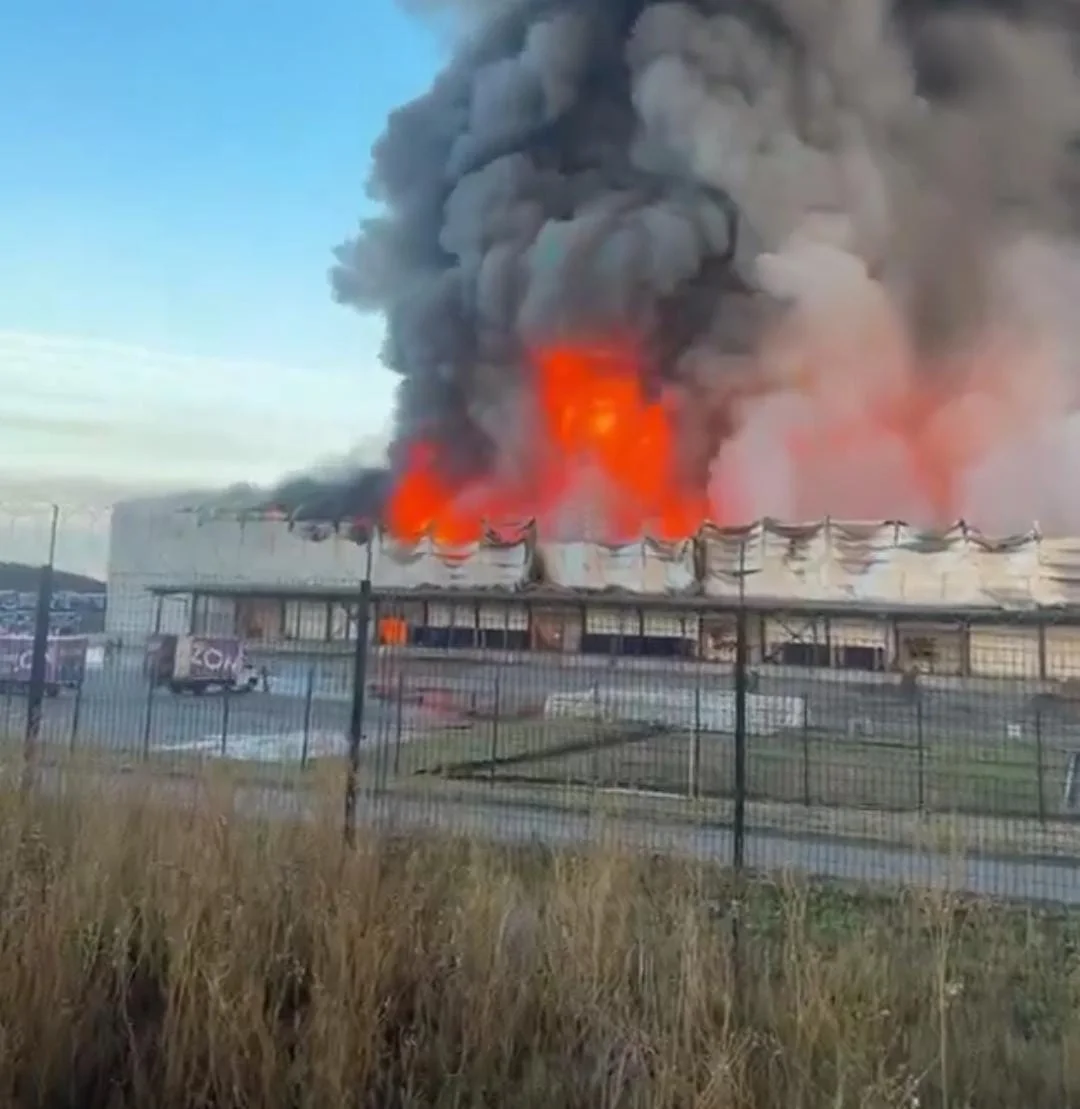
Why are non-military sites across Ukraine suddenly facing a sharp surge in coordinated aerial strikes?
In early September 2026, air raid sirens across Ukraine culminated in another wave of civilian casualties. A devastating strike on the industrial city of Pavlohrad in the Dnipropetrovsk region left five dead, contributing to a regional toll of seven killed and nearly 80 wounded. Within hours, Ukrainian Prime Minister Sergii Koretskyi issued an urgent warning to international partners: Russian strikes on commercial enterprises, fuel depots, and daily municipal infrastructure are no longer isolated incidents—they are “rapidly growing.”
While Moscow routinely claims its long-range drone and missile barrages target purely military and industrial logistics, the evidence on the ground tells a markedly different story. From burning retail fuel stations in Kyiv to shattered agribusiness centers in Dnipro, the strikes point toward an intentional strategy: weaponizing psychological fatigue and economic attrition against Ukrainian society ahead of the harsh winter months.
Whether you are closely monitoring the geopolitical dynamics of Eastern Europe or trying to make sense of the latest breaking headlines, this report provides an objective, step-by-step explainer analyzing the targets struck, Moscow’s underlying coercive doctrine, the international legal implications, and how Europe and NATO are responding.
Key Takeaways: The 60-Second Briefing
-
The Surge in Casualties: On September 10–11, 2026, Russian missile and drone barrages struck urban hubs and commercial sites, resulting in seven deaths—including five killed in Pavlohrad—and 79 injured across the Dnipropetrovsk region.
-
Kyiv’s Warning: Prime Minister Sergii Koretskyi formally alerted European allies that attacks on civilian businesses and infrastructure are expanding rapidly, urging governments to act preemptively.
-
The Strategic Objective: Foreign Minister Andrii Sybiha characterized the campaign as calculated psychological and economic coercion designed to wear down civilian resolve and force Kyiv into diplomatic concessions.
-
Economic Chokepoints: Recent impacts on agricultural processing facilities in Dnipro and fuel distribution stations in Kyiv reveal a systematic campaign to undermine Ukraine’s domestic economy before winter.
-
Allied Countermeasures: In response, European partners and the UK have accelerated missile supply programs toward a benchmark of 1,000 Patriot interceptors, while NATO leadership cited the strikes as proof of the need for higher baseline European defense spending.
What Happened in the Recent Wave of Strikes Across Ukraine?
The latest escalation hit hardest in southeastern Ukraine, where the city of Pavlohrad observed an official day of mourning for victims of the aerial offensive.
According to updates reported by The Guardian’s Europe live coverage, emergency crews were dispatched to extinguish widespread fires in Pavlohrad after missiles hit populated urban areas, leaving five residents dead and dozens hospitalised. Governor Oleksandr Hanzha condemned the operation as a direct crime against civilians who were simply living, working, and raising families.
Simultaneously, secondary strikes were reported hundreds of kilometers away:
-
In Kyiv: A drone struck a retail petrol filling station in the Holosiivskyi district, setting off large secondary blazes in a high-traffic commuter corridor.
-
In Dnipro: A precision strike hit an agricultural processing and storage complex, destroying grain reserves and processing machinery.
The deliberate geographic spread demonstrates that Russia’s target selection has shifted from frontline interdiction to the systematic destabilization of urban civil life.
Why Is Ukraine Warning of ‘Rapidly Growing’ Infrastructure Attacks?
Military analysts and Ukrainian officials observe that these strikes form part of a broader doctrine of exhaustion rather than accidental spillover. The strategy operates across three key fronts:
The Doctrine of Societal Coercion
Ukrainian Foreign Minister Andrii Sybiha detailed Moscow’s tactical intent:
“Russia is systematically attacking places where it knows people will be spending their time going about their daily lives, seeking to maximise casualties, spread fear, and put pressure on Ukrainian society. This is a tactic of coercion. Russia believes that relentless attacks on civilians can exhaust Ukrainians and force Ukraine into concessions.”
Economic and Supply Chain Attrition Ahead of Winter
By striking agribusiness complexes in Dnipro and fuel stations in Kyiv, Moscow aims to choke internal logistics. Weakening domestic food processing impairs export revenue, while knocking out fuel storage cripples municipal transit and local heating resilience before sub-zero temperatures arrive.
Depleting High-End Air Defense Interceptors
Launching swarms of inexpensive loitering drones alongside ballistic missiles forces Ukrainian crews to fire multi-million-dollar Western interceptors (such as PAC-2 and PAC-3 Patriot missiles). This attrition strategy is designed to exhaust Ukraine’s air defense magazines ahead of planned deep winter offensives.
What Does International Law Say About Attacks on Civilian Infrastructure?
Under International Humanitarian Law (IHL), attacks must strictly adhere to the principles of distinction, proportionality, and military necessity:
| Principle of International Humanitarian Law | Statutory Provision (Geneva Conventions) | Legal Implication in Recent Strikes |
| Principle of Distinction | Protocol I, Article 48: Belligerents must distinguish between civilian objects and military objectives at all times. | Striking municipal centers and residential areas in Pavlohrad violates fundamental distinction rules. |
| Protection of Indispensable Objects | Protocol I, Article 54: Forbids attacking, destroying, or removing food production facilities and agricultural areas. | Targeting commercial agribusiness storage in Dnipro directly impacts civilian food supply chains. |
| Prohibition of Terrorizing Civilians | Protocol I, Article 51(2): Acts or threats of violence intended to spread terror among civilian populations are illegal. | Shelling public commercial nodes during operational hours constitutes prohibited coercive terror tactics. |
Under Article 8 of the Rome Statute of the International Criminal Court (ICC), the intentional direction of attacks against civilian objects without direct military advantage represents a war crime.
How Are NATO and European Allies Responding to the Escalation?
The escalation has triggered fresh political and defense momentum across European capitals:
Accelerated Air Defense Shipments
European governments and the UK have prioritized interceptor logistics, coordinating deliveries to fulfill a collective target of 1,000 Patriot missiles for Ukrainian air defense units. In bilateral meetings, Canadian leadership also pledged supplemental defense systems to protect critical energy nodes.
Strengthening the Case for Higher Defense Budgets
The proximity of drone activity and ballistic flight paths to the borders of NATO allies (such as Poland and Romania) has solidified defense consensus within the European Union. NATO officials noted that continuous attacks on Ukrainian civilian infrastructure reinforce the necessity for European member states to lift national defense spending well above the standard 2% GDP guideline.
What Should Observers Watch for in the Coming Weeks?
As the conflict transitions toward autumn and winter, several strategic indicators will determine the trajectory of this campaign:
-
Grid Decentralization: How effectively Ukraine’s state utilities deploy decentralized backup generators, microgrids, and buried substation units to withstand renewed electrical grid strikes.
-
Western Rules of Engagement: Whether the rise in civilian infrastructure damage prompts Western partners to lift operational limits on Ukraine using Western-supplied long-range weapons against air bases inside Russian territory.
-
Diplomatic Pressure Points: How non-aligned nations and international bodies react as strikes increasingly hit food security infrastructure that affects international grain markets.
Frequently Asked Questions
Why did Pavlohrad declare a day of mourning?
Pavlohrad declared an official municipal day of mourning after a Russian strike on September 10, 2026, killed five civilians and injured dozens of residents in non-military districts.
What makes strikes on agribusiness and fuel stations significant?
Agribusiness facilities and petrol stations are dual-use or purely civilian economic assets. Damaging them undermines Ukraine’s ability to generate agricultural exports, distribute food domestically, and maintain civilian transportation and emergency services.
How is Ukraine defending its civilian centers against these attacks?
Ukraine uses a layered air defense network combining advanced Western surface-to-air missile batteries (Patriot, NASAMS, IRIS-T) for ballistic threats with mobile, truck-mounted gun crews and electronic warfare jammers to intercept low-flying Shahed-type drones.

Navya writes on global politics, foreign policy, and international relations. A Political Science graduate from Miranda House, she went on to complete her master’s degree at Delhi University. She focuses on breaking down complex geopolitical shifts and global events into clear, insightful explainers.
2 thoughts on “Fuel, Food, and Fear: Inside Russia’s “Rapidly Growing” Strike Campaign Against Ukrainian Cities”