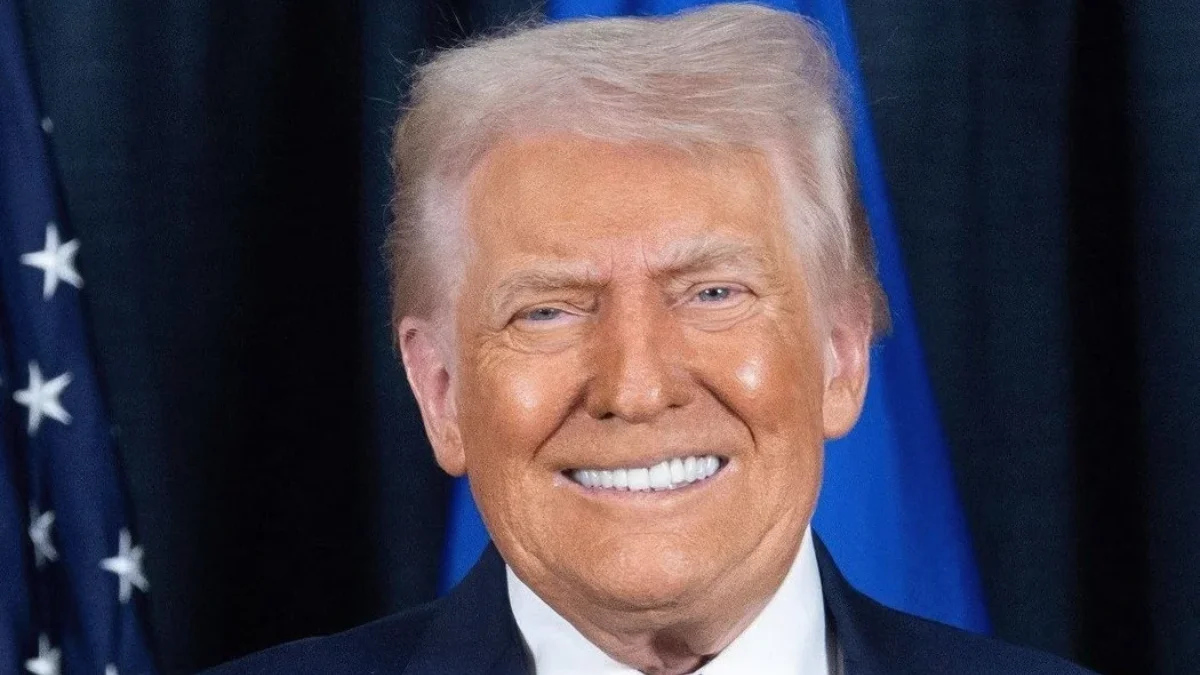
Could every adult in the United States soon receive a $5,000 direct deposit from the federal government?
That is the extraordinary promise made by President Donald Trump at the Republican National Midterm Convention in Dallas, where he pledged to issue a universal, $5,000 “Trump dividend” to every American adult citizen. The catch: Republicans must retain majority control of both chambers of Congress in the November 2026 midterm elections.
With roughly 270 million adults in the United States, fulfilling this single campaign promise carries a staggering price tag of approximately $1.35 trillion—an amount greater than the combined total of all three rounds of COVID-19 stimulus relief. While the proposal has quickly ignited viral debate online, it immediately raises fundamental questions for voters, economists, and global observers alike: Can foreign import tariffs realistically cover a trillion-dollar domestic payout? Does a sitting president have the constitutional authority to issue checks without bipartisan congressional approval? And what would injecting $1.35 trillion in fresh liquidity mean for persistent global inflation and the U.S. dollar?
Below is an objective, step-by-step breakdown of the fiscal math, constitutional guardrails, and international economic consequences behind Trump’s $5,000 dividend pledge
Key Takeaways: What You Need to Know in 60 Seconds
-
The Announcement: U.S. President Donald Trump pledged that every adult American citizen would receive a $5,000 “Trump dividend” if the Republican Party retains control of Congress in the November 2026 midterm elections.
-
The Cost: With roughly 270 million adult citizens in the United States, the total cost of the proposal sits at approximately $1.35 trillion.
-
The Funding Pitch: The administration claims import tariffs on foreign goods will pay for the initiative, yet current annual U.S. customs duties total under $100 billion.
-
The Legal Hurdle: Under the U.S. Constitution’s Appropriations Clause, the president cannot disburse federal funds unilaterally; any direct payout requires statutory approval from Congress.
-
The Global Ripple Effect: Escalating tariffs to fund domestic checks risks sparking retaliatory trade measures from partners like the EU, Canada, and Asian economies, while placing upward pressure on bond yields and inflation.
What Did Donald Trump Actually Promise at the Dallas Convention?
Addressing the Republican Midterm Convention in Dallas, Texas, on September 9, 2026, President Donald Trump delivered an extraordinary campaign pitch directly tied to the upcoming November elections. As documented by The Guardian, Trump announced that American adults would receive a substantial cash payout if his party maintains its legislative majorities:
“If the Republicans win, you win with us, and you get $5,000… I’m asking you to pretend that I’m on the ballot.”
Dubbed the “Trump dividend,” the pledge seeks to transform the midterms into a direct referendum on personal economic gain. While universal payouts and stimulus measures were deployed during the COVID-19 pandemic, conditioning federal checks explicitly on election results represents an unprecedented political maneuver in modern U.S. history.
How Much Would a $5,000 Payout to Every American Adult Actually Cost?
The primary challenge facing the proposal is its immense budgetary scale. Evaluating baseline demographic and economic data demonstrates the fiscal commitment required:
| Question / Metric | Baseline Data | Practical Reality |
| Who is eligible? | ~270 Million Adults | Universal distribution to adult citizens regardless of income. |
| How much per person? | $5,000 | Exceeds the combined total of all three pandemic stimulus checks. |
| What is the gross cost? | ~$1.35 Trillion | Represents approximately 4.8% of current U.S. gross domestic product. |
| What are current tariff revenues? | ~$80–$100 Billion/year | The primary revenue mechanism cited to fund the program. |
| What is the immediate revenue gap? | >$1.25 Trillion | Requires massive sovereign borrowing or deep mandatory spending cuts. |
According to reporting from CBC News, issuing checks of this size would require more federal expenditure than the entire discretionary domestic budget for a fiscal year.
Can Foreign Tariffs Really Pay for a $1.35 Trillion Program?
The White House argued that foreign nations would effectively finance the dividend through elevated import tariffs. From an economic standpoint, this claim faces three primary structural flaws:
The Scale Problem
In fiscal year 2025, U.S. Customs and Border Protection collected roughly $90 billion in import duties. Multiplying tariffs several times over could not generate $1.35 trillion in new revenue within a standard legislative budget window.
Who Actually Pays Tariffs?
Empirical trade data shows that tariffs are not paid directly by foreign governments. Instead, they are collected at domestic ports of entry from American importing firms, which routinely pass higher procurement costs onto consumers through elevated shelf prices.
The Retaliation Risk
Imposing universal baseline tariffs diminishes overall import volumes (shrinking the revenue base) and predictably triggers reciprocal duties on American agricultural, aerospace, and energy exports from trading partners.
Can a U.S. President Send Out Cash Checks Without Congressional Approval?
In short, no. The institutional structure of the United States government creates a firm legal boundary between executive intent and federal spending:
The Power of the Purse
Article I, Section 9, Clause 7 of the U.S. Constitution (the Appropriations Clause) establishes that no funds may leave the Treasury without an explicit act of Congress. An executive order directing the Internal Revenue Service or the Treasury Department to distribute checks without statutory authority would face immediate federal court injunctions.
The 60-Vote Senate Threshold
Even if Republicans retain the House and Senate, passing a $1.35 trillion cash transfer would face the Senate filibuster, requiring 60 votes to advance. While certain fiscal provisions can bypass filibusters through budget reconciliation, strict parliamentary guidelines (the Byrd Rule) prohibit measures that widen long-term deficits without corresponding revenue offsets.
Why Did the White House Announce This Proposal Now?
The timing of the proposal highlights the political headwinds facing the administration ahead of the November 3, 2026 elections:
-
Depressed Approval Ratings: Nationwide polling places President Trump’s approval rating near 38%, influenced by persistent inflation, consumer borrowing rates, and elevated fuel costs connected to ongoing geopolitical tensions with Iran.
-
Midterm Historical Precedent: The party controlling the White House has lost House seats in nearly every midterm cycle over the past century.
-
Internal Party Divisions: Several vulnerable Republican incumbents facing tight races—including Senator Susan Collins of Maine and Senator Dan Sullivan of Alaska—skipped the Dallas convention to maintain independence in swing districts. The proposal serves as an attempt to mobilize the core voter base and change the campaign narrative.
How Would a $1.35 Trillion Cash Transfer Impact the Global Economy?
Because the U.S. dollar serves as the primary global reserve currency, federal spending decisions of this magnitude produce immediate international ripple effects:
Inflation Pressures and Interest Rates
Injecting over $1 trillion in liquid capital directly into households stimulates short-term consumer demand. In a constrained supply environment, this risks accelerating core inflation, forcing the Federal Reserve to maintain higher interest rates for an extended period.
Pressure on Sovereign Debt and Bond Markets
With U.S. national debt already surpassing $35 trillion, adding $1.35 trillion in unbacked obligations places upward pressure on U.S. Treasury yields. Higher yields attract capital into dollar-denominated assets, which can weaken emerging-market currencies and increase debt-servicing costs for developing economies.
Escalating Global Trade Disputes
If the administration attempts to extract funding via sharp tariff hikes, trade partners—including the European Union, Canada, Japan, and India—are likely to challenge the measures through the World Trade Organization (WTO) while deploying retaliatory tariffs on American goods.
Frequently Asked Questions
Is the $5,000 payment guaranteed to happen?
No. The proposal is currently a political campaign pledge. It has not been introduced as draft legislation in Congress and faces substantial fiscal, statutory, and political obstacles.
Who would qualify for the check under Trump’s proposal?
The plan as articulated in Dallas was universal, applying to all adult American citizens aged 18 and older, without the income caps that characterized earlier pandemic-era stimulus measures.
How does this differ from Universal Basic Income (UBI)?
Universal Basic Income involves guaranteed, regular monthly payments intended to establish a foundational income floor. Trump’s proposal is a one-time lump-sum dividend explicitly conditioned on an election victory.

Navya writes on global politics, foreign policy, and international relations. A Political Science graduate from Miranda House, she went on to complete her master’s degree at Delhi University. She focuses on breaking down complex geopolitical shifts and global events into clear, insightful explainers.